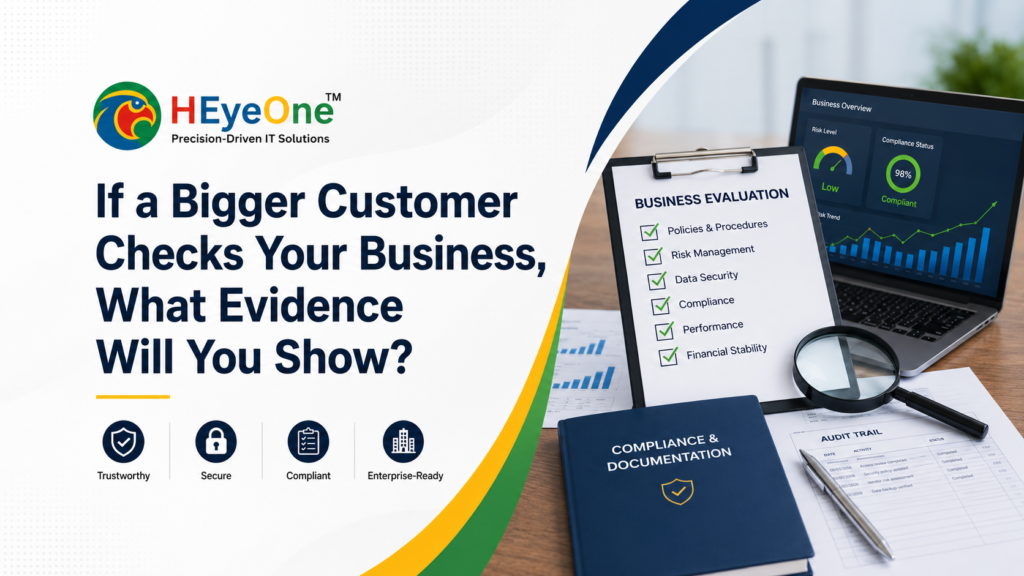
If a Bigger Customer Checks Your Business, What Evidence Will You Show?
🗓️June 15, 2026
·
🕐 4 min read
Many growing businesses want bigger customers.
A bigger client.
A stronger partner.
A serious investor.
A corporate buyer.
A large vendor approval.
A better market opportunity.
But when that bigger opportunity comes, the question is not only:
Can you deliver the work?
The real question is:
Can you prove that your business is ready?
Because bigger customers do not only look at your product, service, price, or website.
They also look for evidence.
Bigger Customers Look Beyond Promises
A small customer may trust you based on relationship, confidence, or word of mouth.
But bigger customers usually think differently.
They may ask:
- Do you have a defined process?
- Do you track customer follow-ups?
- Do you protect business and customer data?
- Do you have basic documentation?
- Do you know who is responsible for what?
- Can you show proof of delivery, quality, security, or compliance?
- Is your website creating trust?
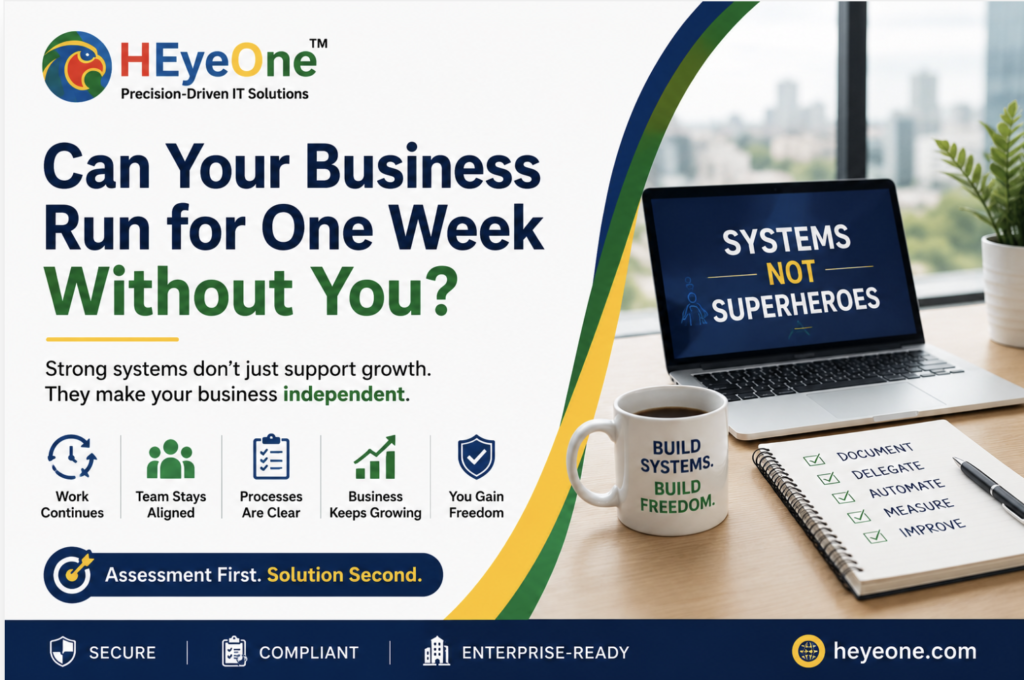
- Is your business dependent only on one person?
These questions are not asked to trouble you.
They are asked because bigger customers also carry bigger risk.
Before they trust a vendor, partner, or service provider, they want to see whether the business is structured enough to handle responsibility.
Effort Is Not Always Enough
Many business owners work very hard.
They manage customers, teams, vendors, payments, operations, sales, and follow-ups every day.
But hard work alone does not always create readiness.
A business may be doing good work, but still not have:
- Clear process records
- Customer follow-up tracking
- Basic data security controls
- Updated website information
- Documented responsibilities
- Service history or evidence
- Compliance readiness
- Organized business records
- Lead and enquiry tracking
- Review or improvement mechanism
This creates a gap.
The business may be capable, but it may not look ready when reviewed by a bigger customer.
Evidence Builds Trust
Evidence does not always mean heavy documentation.
It can be simple and practical.
For example:
- A CRM pipeline showing lead status
- A follow-up tracker
- A clear website with services and contact path
- A customer onboarding checklist
- A role and responsibility matrix
- A basic policy or procedure
- A record of completed work
- A backup or access control process
- A list of risks and actions
- A compliance or certification plan
- A monthly review tracker
These small things show that the business is not running only on memory or verbal communication.
They show discipline.
They show maturity.
They show trust.
Where Businesses Usually Struggle
Most businesses do not fail because they lack intent.
They struggle because systems are not clear.
Common gaps include:
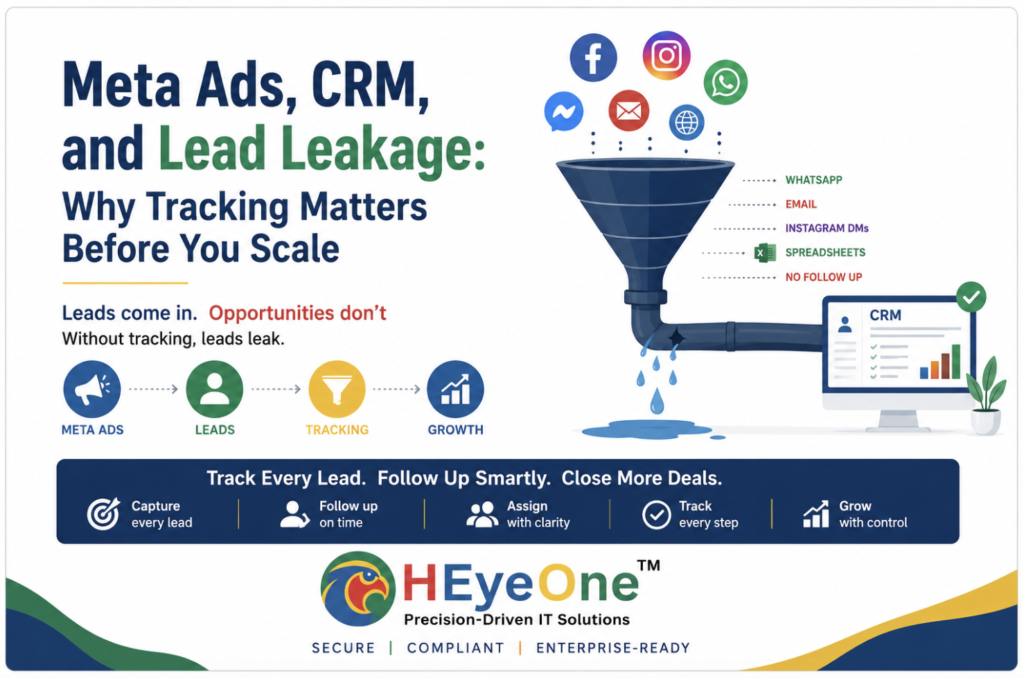
- Leads come in, but nobody owns follow-up clearly.
- Website is live, but it does not build enough trust.
- CRM exists, but the team does not use it properly.
- Customer data is stored in different places without control.
- Processes are understood by people, but not documented.
- Important work depends on one person.
- Compliance is considered only when a customer asks for it.
- Marketing brings enquiries, but backend tracking is weak.
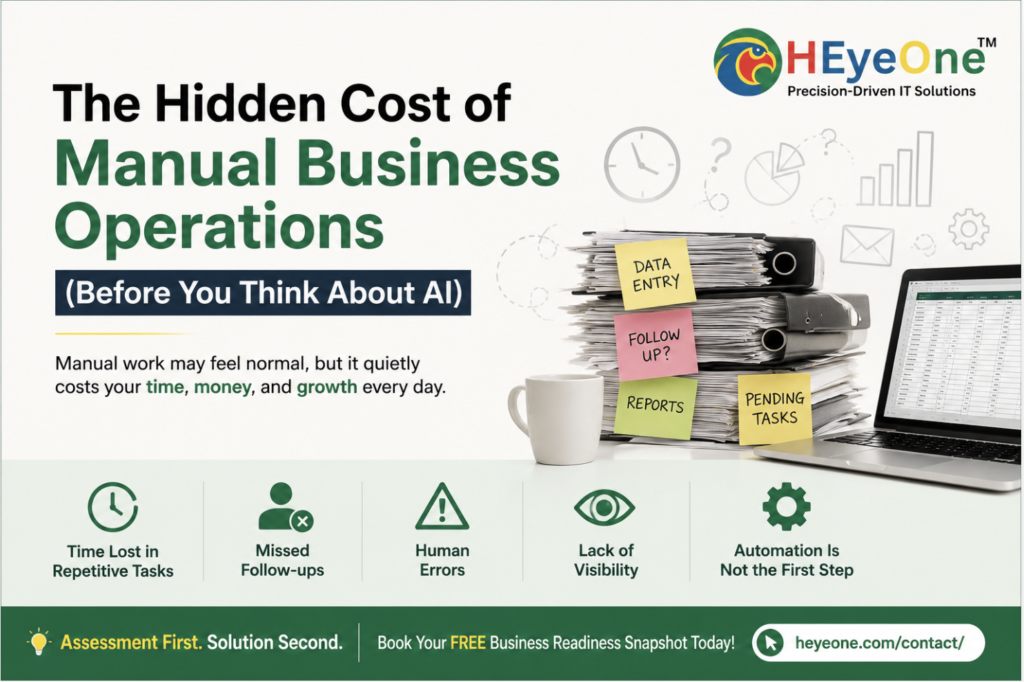
- Reports are prepared only when someone demands them.
These are not small issues when a bigger customer evaluates your business.
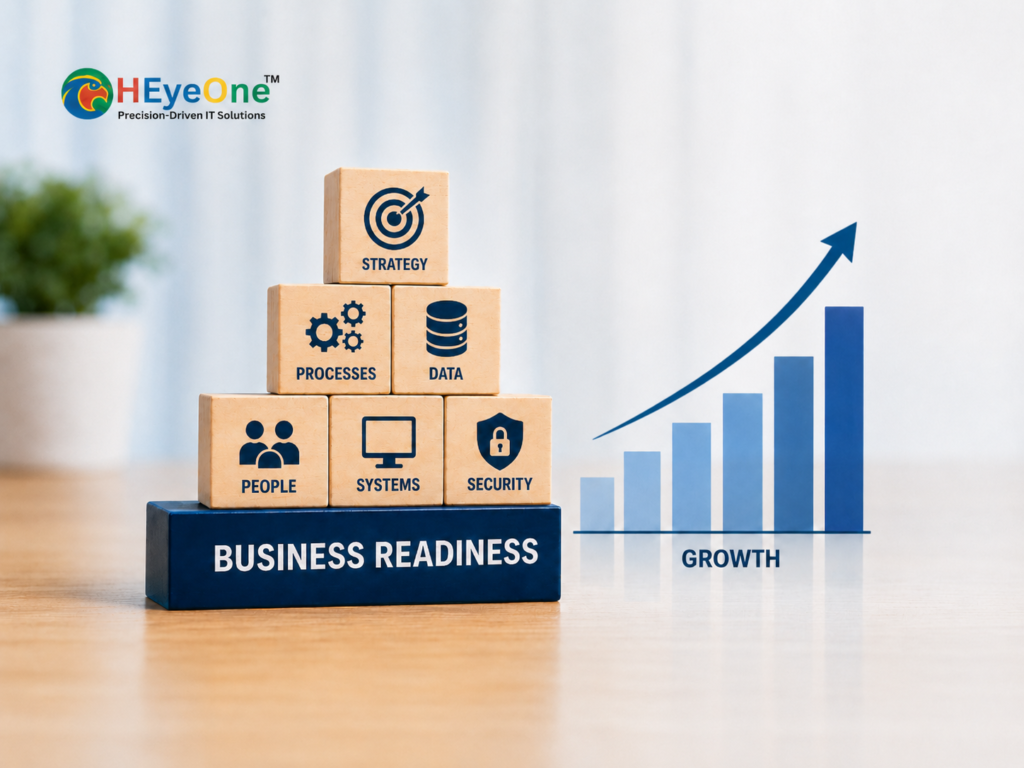
Business Readiness Is a Practical Check
Business readiness is not about making a business complicated.
It is about checking whether the foundation is strong enough for growth.
Before spending more on ads, website redesign, CRM, ERP, ISO, cybersecurity, cloud, or AI, a business should first check:
- What is already working?
- Where are leads leaking?
- Where is trust weak?
- Where is data exposed?
- Where is process unclear?
- Where is evidence missing?
- What should be fixed first?
This clarity helps the business invest better.
Instead of buying tools blindly, the business understands the real gap first.
The HEyeOne View
At HEyeOne, we believe in a simple approach:
Assessment First. Solution Second.
Before recommending website, CRM, compliance, cloud, cybersecurity, AI, or process improvement, we first check the business readiness level.
The purpose is not to overload the business with frameworks.
The purpose is to give practical clarity.
We help identify:
- What is missing
- What is urgent
- What can wait
- What will help the business look more trusted, structured, and ready
That is how a growing business can move from effort to readiness.
Final Thought
A bigger customer may not ask everything on day one.
But when they do ask, your business should not start searching for evidence at the last moment.
Readiness should be built before the opportunity arrives.
Because when opportunity comes, the prepared business looks more trustworthy.
Book your Free Business Readiness Snapshot with HEyeOne:
https://heyeone.com/contact/
Secure | Compliant | Enterprise-Ready.